Communication
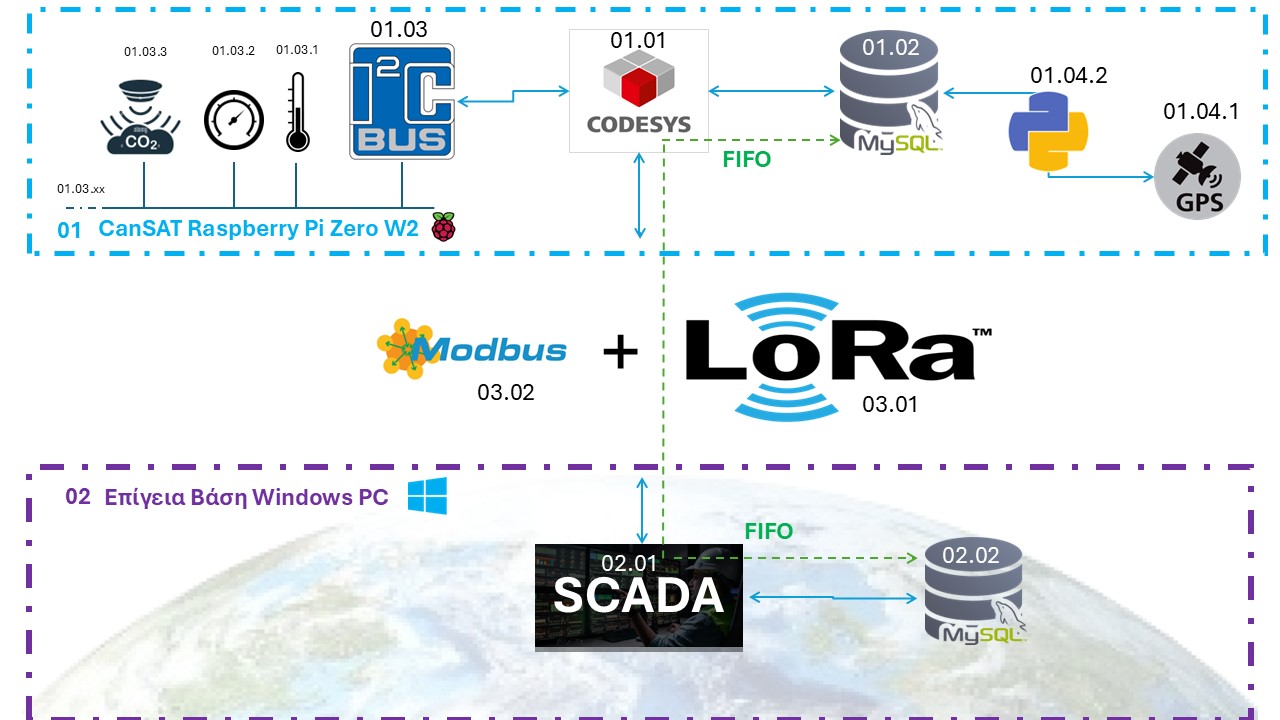
In our CanSat mission, we propose an innovation in communication, based on the FIFO (First In, First Out) principle. This method ensures that all the data collected by the sensors will be sent and received in the correct order, without losing any important information. The FIFO’s function relies on a data queue that temporarily stores the measurements during transmission. In the event that the communication system encounters outages or bandwidth limitations, the data remains safe in the queue and is sent as soon as the connection is restored. This ensures reliable transmission of data from CanSat to the base station.
This method is particularly useful in missions where the connection may be unstable, such as during the CANSAT’s fall or at high altitudes. In addition, it reduces the risk of losing critical measurements, enhancing the quality and reliability of the scientific data we collect. To implement this protocol, we use the Raspberry Pi W2, which provides the necessary processing power and storage capacity to efficiently manage the FIFO queue and ensure the stability and reliability of the communication, even under demanding conditions.
With the Raspberry Pi W2, we can:
1. Temporarily store data in its internal memory, ensuring that it is not lost even in case of communication interruption.
2. We can implement FIFO accurately, ensuring that data is sent in the correct order.
Choosing the Raspberry Pi W2 offers a significant advantage over other solutions using Arduino or Raspberry Pi Pico, as these systems have limited data processing and storage capabilities, which makes them less suitable for implementing advanced techniques such as FIFO (First In, First Out). Specifically:
1. Arduino
Arduino platforms, although excellent for simple applications with low resource consumption, are limited by the lack of sufficient RAM and storage to support data protocols such as FIFO. This can lead to data loss or instability during communication, especially in demanding missions such as CanSat.
2. Pico
Similar to the Arduino, the Raspberry Pi Pico has limited resources (memory and processing power) compared to the Raspberry Pi W2. Although the Pico supports basic applications, it does not have the ability to manage complex storage operations or efficiently implement FIFO with the same reliability that the Raspberry Pi W2 can provide.
Programming Environment
The programming of the Raspberry Pi is carried out in Codesys, a powerful development environment that supports integrated development for devices such as the Raspberry Pi. Codesys is one of the most professional environments in the industrial sector and is compatible with a wide range of PLCs. We chose it for the reliability it offers to our mission, with ready-made and well-tested methods, eliminating the need to “reinvent the wheel.” It provides solutions without shortcuts, offering a professional and innovative approach for the CanSat project.
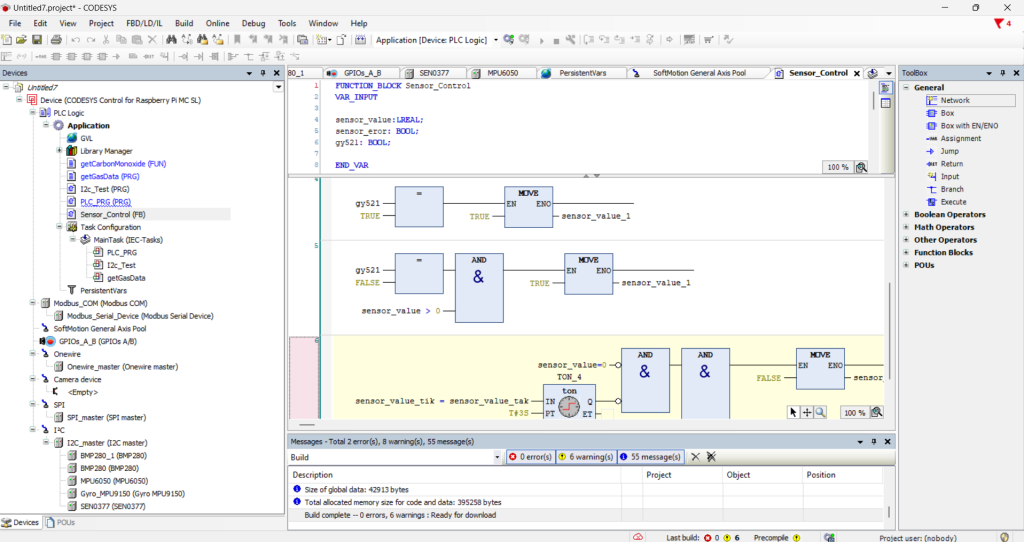
Additionally, we utilize Codesys to ensure the reliability of the mission by providing comprehensive logging of operational anomalies. For example, in the event of a sensor disconnection, such as a temperature sensor losing connection, Codesys allows us to identify precisely when and why the issue occurred. This enables us to analyze the conditions leading to such faults and implement corrective measures. Moreover, the system records instances of communication loss with the satellite, helping us track potential weaknesses in the telemetry link or power fluctuations. By maintaining detailed logs of these irregularities, we can enhance diagnostics and improve the overall performance of the CanSat, ensuring that we address any imperfections proactively.
Central communication environment
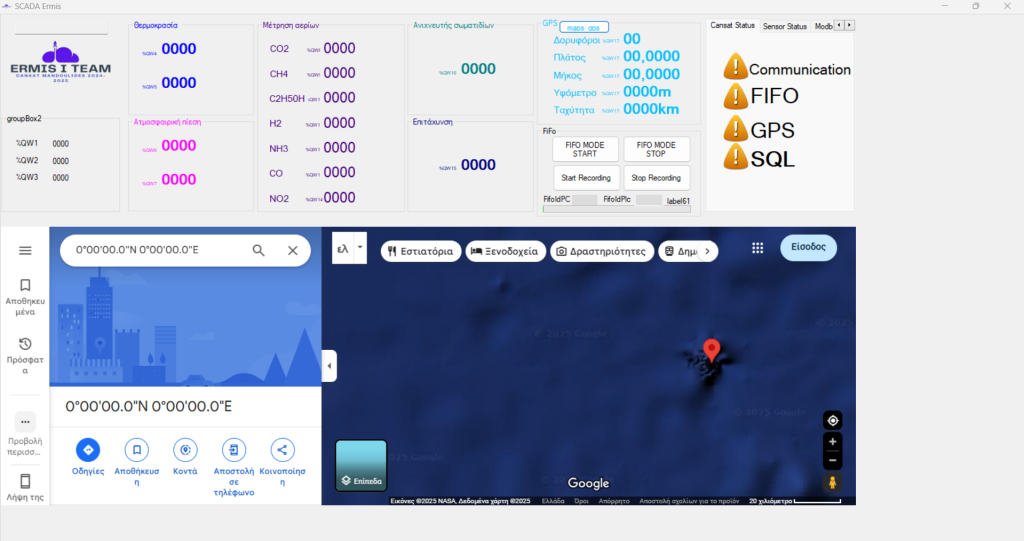
Furthermore, an application has been developed to communicate with the CanSat via LoRa, providing real-time data reception in a graphical environment. This application not only visualizes the telemetry data from the CanSat—such as sensor readings, GPS coordinates, and system status—but also records this information in structured formats like Excel and XML. These formats ensure compatibility with various analysis tools and allow for easy sharing and long-term data storage.